

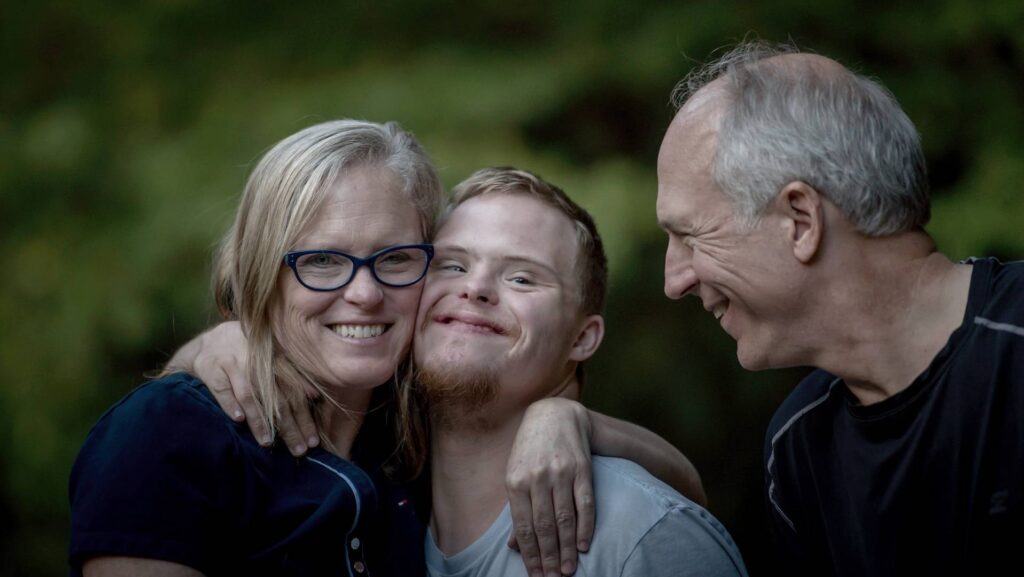
Relationships and additional needs parenting

parents with child with additional needs

When you're raising a child with additional needs, the pressure can affect every part of family life, including your closest relationships. The constant battles for support, understanding and resources can leave parents exhausted and emotionally stretched. This article offers encouragement for couples and families navigating these challenges, exploring how to protect important relationships, choose hope when life feels hard, and face the future together rather than alone.

A gentle note:

This article discusses relationship strain, grief, disappointment, exhaustion and the challenges that can accompany parenting a child with additional needs. Some readers may recognise painful aspects of their own experience. Please read at a pace that feels right for you. If your relationships are under significant pressure or you are feeling overwhelmed, consider reaching out to someone you trust or seeking appropriate support. You do not have to carry everything on your own.

Raising a child or children with additional needs saps your energy and strength. Parents may feel they are engaged in an unending battle.

We fight to have our concerns taken seriously. We fight to get a diagnosis, for acceptance, for resources, for access to the right education, for respite and or support.

When the rest of your circumstances demand a fight, it can be hard not to fight with those (or flight from those) nearest to you. It is no surprise that family break down among families with disabilities or children with additional needs is high. We must be intentional about standing shoulder to shoulder with our nearest and dearest, fighting together not blowing apart.

So how do we avoid hurting the ones we love when everything else feels uncertain?

First, choose faith not frustration. In times of loss, exhaustion, disappointment and fear, we can lose sight of the person we married, opting to focus on their flaws or our own frustrations in the relationship. When dreams we never knew we dreamed lie shattered in pieces around us, disenchantment and anxiety, feelings of guilt (what did I do wrong?) and self-loathing (why can’t I cope?) can cause us to withdraw or to project our pain on to the people who actually are best placed to help us: spouses, partners and other key relationships, for instance, parents and siblings.

Perhaps we don’t recognise ourselves anymore so we struggle to connect with those nearest to us. They too are changed and changing to cope with the new life we share. We dreamed we’d be a butterfly but it looks like we are going to be hairy, earthbound caterpillars a lot longer than we presumed, and our time in the chrysalis is going to be darker and much harder to break free from than we imagined. I look at you and realise I didn’t much like the caterpillar – but the chrysalis … well, I don’t find that attractive at all!

Every ounce of our emotional and physical energy is being invested into meeting our child’s ‘additional need’ (if only it were just one – need and child!).

The heaviness of our circumstances can cause us to become disenchanted with our spouse, their quirks that once made us glad now make us mad. Their commitment to work which once made us proud now makes us feel alone. Their playfulness which used to make us laugh now makes us feel old and tired.

As in everything we have a choice. We can choose frustration and resentment or we can choose faith and hope. We can choose to learn to love the new people we have become.

Next, see potential not imperfections. It’s easy to focus on all of today’s problems, and perhaps even easier to shy away from a future that seems overwhelming, but viewing your relationship in terms of what it could be – creating a hope-filled narrative for the future of your marriage – will always leave you willing to invest more. It has been said that in marriage, you marry someone’s problems and their past, but you also marry potential. You marry what they could become. Now is not forever. It may help to take some time to imagine what your relationship could look like in five years. Choose a hopeful perspective, a ‘glass half full’ approach as you imagine what your relationship could look like then.

Lastly, chase fulfilment not happiness. When life doesn’t go according to plan, it can be easy to focus inward, acting out of a desire for personal happiness that now seems far out of reach. But healthy relationships are about giving, and in return receiving more than you need. Selflessness rather than selfishness, vulnerability rather than pride, asking for help rather than doing it ‘your way’ will ultimately result in true and longer lasting happiness.

If you’re a parent who’s struggling with a diagnosis, disability, loss, grief, or an unexpected twist in your story that will alter the rest of your life, know that you’re not alone.

You may find these pages on our website helpful:

You are also welcome to call Care for the Family on 029 2081 0800 or email our Additional Needs Support Coordinator, Nicola, at nicola.watson-bird@cff.org.uk

Key takeaways

  • The pressures of raising a child with additional needs can place enormous strain on relationships, and many families experience this challenge.
  • When life feels like a constant battle, it’s important to remember that your partner is not the enemy. You’re on the same team.
  • Difficult circumstances can change people, but relationships can still grow and adapt through those changes.
  • Choosing hope and faith in one another can be more helpful than focusing only on frustrations and disappointments.
  • It’s easy to see flaws when you’re exhausted. Looking for potential and strengths can help build a more positive future together.
  • Healthy relationships are strengthened through selflessness, vulnerability and a willingness to ask for help.
  • Whatever challenges you’re facing, you are not alone, and support is available.

Next steps

If this article reflects your experience, consider setting aside time to talk honestly with your partner, a trusted family member or a supportive friend about the pressures you’re carrying. Even small conversations can help reduce isolation and build understanding. If you fear your relationship may not survive then please reach out to Care for the Family’s Careline asking for relationship support.

Find support

About the author

The Parent Support team at Care for the Family are dedicated to helping families build strong relationships. Drawing on research, decades of experience with proven approaches and compassionate insight, the team provides guidance for all stages of family life. They’re passionate about supporting mums, dads and carers, creating resources that help them build healthy relationships and learn to respond to challenges with confidence.

You might be interested in

PDA additional needs blog
Article

Parenting a child with Pathological Demand Avoidance

Often because we don’t know we mistake ‘I won't’ for ‘I can’t’. But there are strategies that help, and as is often the case when we improve things for people with additional needs, we improve life for everyone.

Additional Needs Resilience blog
Article

Resilience for additional needs parenting

In this personal reflection, a parent of a child with additional needs explores what resilience really looks like: making space for grief, being honest about struggles, accepting support from others, and finding ways to keep moving forward through life's ongoing challenges.

Non-finite grief blog image v2
Article

Non-finite grief

Non-finite grief is a melancholy we may feel when our child with additional needs doesn’t meet their developmental milestones, while all our friends’ children of a similar age do.

Coping Strategies ANS parenting blog
Article

Coping strategies

‘Keep Calm and Carry on’ might be a great maxim for parents of children with additional needs. Frankly, we don’t have an option but to carry on.

10 Things every child with autism blog
Article

10 things every child with autism wishes you knew

In this article, you will find out more about how to support your autistic child or teenager.

Man and boy overlooking water
Article

Additional needs parenting: Finding the strength to keep going

Parenting a child with additional needs takes courage and determination. Our Additional Needs Support Coordinator, Nicola Watson-Bird, shares ten things for parents to consider as they find the strength to keep going.

Help us support families today

Caring for a partner's mental health can be one of the hardest parts of married life — and Care for the Family is here for couples walking through it. If you're able to make a one-off donation to support our work, we'd be very grateful. Thank you.

Make a donation
Skip to content